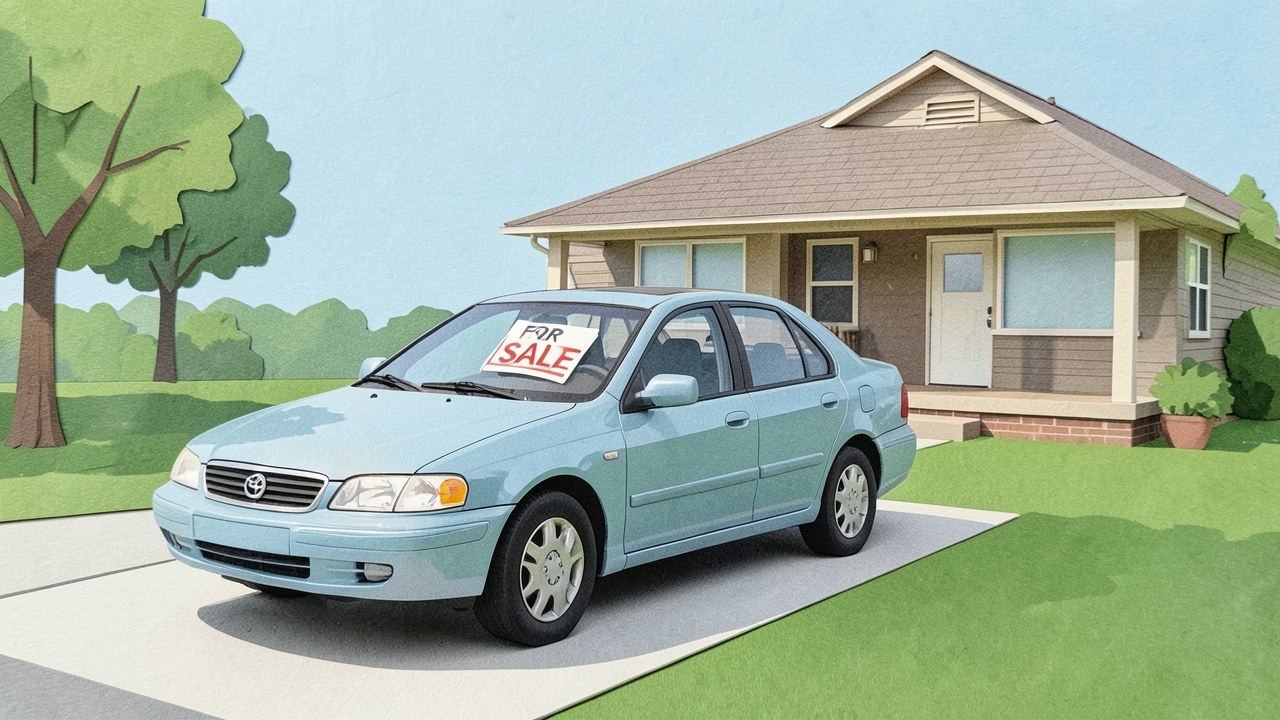
How Used Car Loans Differ from New Car Loans
Used car loans typically come with higher interest rates than new car loans. The main reason is that used cars are riskier collateral for lenders: they are harder to value precisely and are more likely to need expensive repairs during the loan term. This added risk is reflected in a higher annual percentage rate (APR).
Beyond the rate, used car loans often have different terms. New cars depreciate rapidly—about 20% in the first year—but used cars lose value more slowly. That means a used car may offer lower overall ownership costs, including lower insurance premiums, but the financing itself usually costs more.
- Higher risk for lenders: used cars are harder to value and more likely to have mechanical issues.
- Depreciation and insurance: used cars generally cost less to insure and depreciate more slowly than new cars.
- Loan terms: used car loans may have shorter maximum terms, as lenders are cautious about financing older vehicles.
Sources: Equifax, Red River Credit Union
Factors That Affect Used Car Interest Rates
Lenders evaluate several key factors when setting used car loan rates, and many are within your control. Understanding these can help you improve your chances of getting a lower APR.
- Credit score and history: Your creditworthiness is the single largest factor. Higher scores generally receive lower rates.
- Income and debts: Lenders look at your income and existing debt obligations to assess your ability to repay.
- Down payment and loan-to-value (LTV): A larger down payment lowers the LTV ratio, which can reduce the rate and total interest paid.
- Vehicle age and mileage: Cars older than five years or with high mileage may trigger higher rates, as some lenders view them as riskier.
- Loan term: Longer terms often have higher APRs but lower monthly payments.
- Borrowing more than the car's value: Financing taxes, fees, or negative equity could result in a higher rate.
Sources: Consumer Financial Protection Bureau, Broadview Federal Credit Union
Typical Rate Ranges for Used Cars
Used car interest rates vary widely by credit score and market conditions. The following table shows average APRs for used car loans based on Experian data from recent quarters. These are national averages and are not guaranteed; your actual rate will depend on your lender, the car, and your financial profile.
| Credit Score Band | Average APR (Experian Q2 2024) | Average APR (Experian Q3 2025) |
|---|---|---|
| Super prime (781-850) | 7.13% | 7.70% |
| Prime (661-780) | 9.36% | 10.36% |
| Near prime (601-660) | 13.92% | 14.59% |
| Subprime (501-600) | 18.86% | 18.84% |
| Deep subprime (300-500) | 21.55% | 21.85% |
Tips to Get a Lower Used Car Rate
While you can't control the market, you can take several steps to improve the rate you're offered. The following strategies are backed by the research and can help you save money over the life of the loan.
- Improve your credit score before applying: Pay down debts and correct errors on your credit report.
- Save for a larger down payment: A bigger down payment lowers your LTV and can reduce the rate.
- Choose a shorter loan term: Shorter terms typically come with lower APRs, even though monthly payments are higher.
- Shop around and compare offers: Different lenders may offer very different rates, so getting multiple quotes is essential.
- Consider direct lending: A loan from a bank or credit union can potentially offer a better rate than dealer-arranged financing, because there's no added margin to compensate the dealer.
- Negotiate the rate with the dealer: If you use dealer financing, remember that the dealer can mark up the buy rate, so you can negotiate the rate.
Sources: Consumer Financial Protection Bureau, Broadview Federal Credit Union, Experian
Comparing Used Car Loan Offers
When you're ready to finance a used car, it's important to compare more than just the monthly payment. The term length and APR affect the total cost, and understanding these details will help you choose the best deal.
Here is a side-by-side comparison of the two main financing routes: dealer-arranged financing and direct lending from a bank or credit union.
- APR, not just the monthly payment: A lower APR usually means less total interest paid, even if the monthly payment is higher.
- Loan term: Shorter terms cost less overall, but have higher monthly payments; longer terms lower the monthly payment but increase total interest.
- Fees and add-ons: Ask about origination fees, documentation fees, and any add-on products like extended warranties.
- Prepayment penalty: Some loans charge a fee for paying off early. Avoid these if possible.
| Criterion | Dealer-arranged financing | Direct lending |
|---|---|---|
| Rate potential | Consumer can negotiate the rate, as dealers can mark up the buy rate | Potentially lower rate because no dealer margin |
| Convenience | Dealer handles legwork of shopping around | Can get preapproved before visiting dealer |
| Negotiation | Allows negotiation on rate and terms | Rate is typically fixed; may be less negotiable |
| Preapproval | Not typically available | Can be obtained before car shopping |
Sources: Consumer Financial Protection Bureau, Experian
New Car Loans vs. Used Car Loans: Side-by-Side Category Comparison
The following table compares typical new and used car loan rates by credit score band. This is a category-level comparison, not a lender-specific quote, and it reflects different reporting periods—so treat the numbers as indicative ranges rather than exact current rates.
| Credit Score Band | New Car APR | Used Car APR |
|---|---|---|
| Super prime (781-850) | 5.25% | 7.13% |
| Prime (661-780) | 6.87% | 9.36% |
| Near prime (601-660) | 9.83% | 13.92% |
| Subprime (501-600) | 13.18% | 18.86% |
| Deep subprime (300-500) | 15.77% | 21.55% |
Sources: Experian
Frequently asked questions
Is it cheaper to finance a used car?
It depends. Used cars generally cost less to buy, insure, and depreciate more slowly, but the interest rate on a used car loan is typically higher than on a new car loan. So, the total cost of financing a used car could be higher if you finance a larger amount over a longer term. However, the lower purchase price and insurance savings may offset the higher rate.
Sources: Equifax, ExperianWhat is a good interest rate on a used car?
A good used car rate is one that is below the national average for your credit score band. According to Experian data from recent quarters, average used car APRs for the second quarter of 2024 ranged from 7.13% for super-prime borrowers (781-850) to 21.55% for deep subprime (300-500). By the third quarter of 2025, the average for super-prime had risen to 7.70%, while deep subprime stayed near 21.85%. If your quoted rate is near the lower end of your band, it is likely a good rate.
Sources: Bankrate, ExperianCan I negotiate the interest rate on a used car loan?
Yes, if you finance through a dealer. The dealer receives a buy rate from the lender but can mark it up when offering you the loan. You can negotiate the rate just like the price of the car. Financing through a bank or credit union directly (direct lending) may also give you a lower rate because there is no dealer margin added.
Sources: Consumer Financial Protection Bureau, ExperianShould I get a loan from a dealer or a bank?
It depends on the offers. Dealer financing is convenient and you can negotiate the rate, but the dealer may add a margin to the lender's rate. Direct lending from a bank or credit union may offer a lower rate because there's no dealer markup, and you can get preapproved before you shop. Compare the APR, terms, and fees from both sources to see which is lower and which fits your budget.
Sources: Consumer Financial Protection Bureau, ExperianSources
- How does a lender decide what interest rate to offer me on an auto loan? — Consumer Financial Protection Bureau
- Can I negotiate a car loan interest rate with the dealer? — Consumer Financial Protection Bureau
- How do I compare auto loan offers? — Consumer Financial Protection Bureau
- What is a loan-to-value ratio in an auto loan? — Consumer Financial Protection Bureau
- Average auto loan interest rates by credit score in 2026 — Bankrate
- Current Used Car Loan Rates: 2026 Guide — Broadview Federal Credit Union
- Comparing Auto Loans: New Car Loans vs Used Car Loans — Equifax
- Car Payment Calculator — Experian
- Why A Used Car Loan Typically Has A Higher Rate — Red River Credit Union